
What is a 3D Stretch Ceiling?
Many of my clients, from interior designers to experienced contractors, often come to me asking for a "3D stretch ceiling," but the concept itself can be confusing. The problem isn't the availability of material; it's understanding that a true 3D effect isn't a single product, but rather a design outcome achieved through very distinct methods. This confusion can lead to incorrect material orders and project delays, but I'm here to clarify the two main paths to achieving this sought-after aesthetic.
A 3D stretch ceiling is not a specific material you simply purchase; instead, it's a design outcome realized through one of two primary methods: either by creating a visual optical illusion using specialized UV-printed films with strategic backlighting, or by physically molding flexible stretch membranes over a custom-built, three-dimensional architectural framework to create tangible shapes and forms. Both approaches offer stunning results, but they demand different materials and installation expertise.
Understanding these two distinct pathways is crucial for anyone looking to incorporate a 3D stretch ceiling into their project. Let’s dive into each method, exploring how they work, what materials they require, and what considerations you need to keep in mind to bring your vision to life.
How Do You Create a Visual 3D Stretch Ceiling Effect?
Are you envisioning a breathtaking mural that appears to leap off the ceiling, or perhaps a cosmic scene with planets seemingly floating above? The challenge with these designs is ensuring the visual depth translates effectively without looking flat or distorted. Many contractors struggle to achieve this true immersive effect, often due to a misunderstanding of how light and print interact.
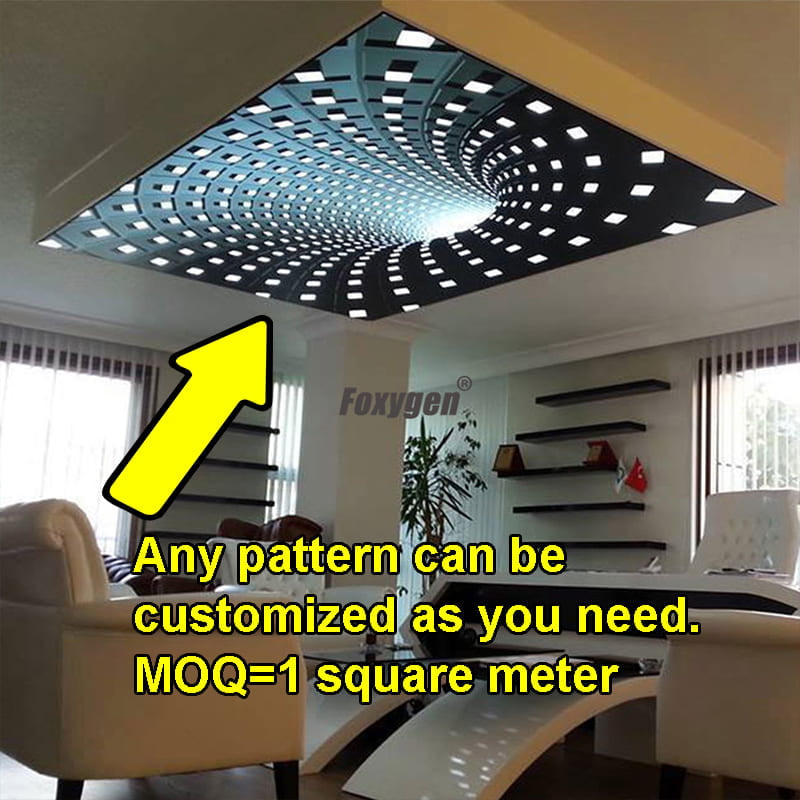
A visual 3D stretch ceiling effect is primarily achieved by UV-printing high-resolution, three-dimensional graphics onto a flat translucent stretch ceiling membrane, which is then dramatically enhanced by even and well-calibrated LED backlighting.1 This technique creates an optical illusion, making a two-dimensional surface appear to have depth and form2, transforming ceilings into dynamic art installations.
The Magic of UV Printing for Optical 3D Effects
When a client asks me for a "3D picture ceiling," I know immediately they are looking for this visual effect. This method leverages advanced UV printing technology to apply incredibly detailed and high-resolution images3 onto our stretch ceiling films. The core idea is to choose graphics that inherently possess three-dimensional qualities—think of geometric patterns that recede, deep space imagery, or architectural elements that create a sense of perspective. My company, Foxygen, specializes in UV printing customized patterns, allowing designers to bring almost any graphic concept to life. We utilize specialized UV inks that adhere perfectly to the PVC film, ensuring vibrancy and durability4. The quality of the original image file is paramount here; a low-resolution image will result in a blurry or pixelated finish5, undermining the 3D illusion. We often consult with clients on optimal file types and resolutions to ensure the printed outcome matches their design intent. This printing process transforms a simple PVC membrane into a canvas for complex visual trickery, where lines, shadows, and perceived depth are all carefully crafted onto a flat surface.
Critical Role of Backlighting in Visual 3D
Without proper backlighting, a UV-printed "3D" graphic on a stretch ceiling is just a flat picture. The true magic of the optical illusion comes alive when light is introduced from behind the translucent membrane. Even, consistent LED backlighting is not just important; it's absolutely critical.6 When light passes through the printed film, it illuminates the colors and contrasts, enhancing the perception of depth and making elements appear to pop out or recede. I've seen projects where inadequate backlighting caused "hot spots" – bright, uneven patches – which instantly destroys the illusion and distracts from the artwork. To prevent this, we advise on the correct spacing of LED strips or modules and often recommend diffused lighting solutions to ensure a seamless glow across the entire surface. The depth of the light box behind the ceiling also plays a significant role; if it's too shallow, the light won't diffuse properly.7 This meticulous attention to illumination is what transforms a static image into a dynamic, immersive experience, making the ceiling truly appear three-dimensional.
Avoiding Common Pitfalls with Printed 3D Ceilings
While the visual 3D stretch ceiling offers incredible design flexibility, there are several pitfalls that I consistently help clients navigate. The first is poor UV ink quality. Substandard inks can fade over time, crack, or appear dull, diminishing the visual impact. We ensure our UV printing uses durable, vibrant inks that maintain their integrity. Another common issue, as I mentioned, is incorrect light box depth or insufficient LED diffusion. This leads to visible LED dots or uneven lighting, known as "hot spots," which completely shatter the illusion of depth. I always emphasize the need for a properly constructed and adequately spaced lighting framework behind the membrane. Furthermore, selecting the right film type is crucial; a too-opaque film won't allow enough light through, while a film that's too thin might show imperfections. Lastly, the resolution and quality of the original digital art file cannot be overstated. A low-resolution image, when blown up to ceiling size, will appear pixelated, negating any 3D effect. My team provides technical guidance on image requirements to ensure a flawless and impactful visual result, helping our B2B partners avoid costly reworks and achieve their desired aesthetic.
What Does a Structural 3D Stretch Ceiling Involve?
Many clients aspire to create unique architectural features like undulating waves, elegant domes, or multi-tiered ceiling designs. However, the common hurdle is finding a material that is flexible enough to conform to complex shapes while maintaining a pristine, seamless finish. Traditional rigid ceiling materials simply can't achieve these fluid forms8, leaving designers searching for a viable solution.
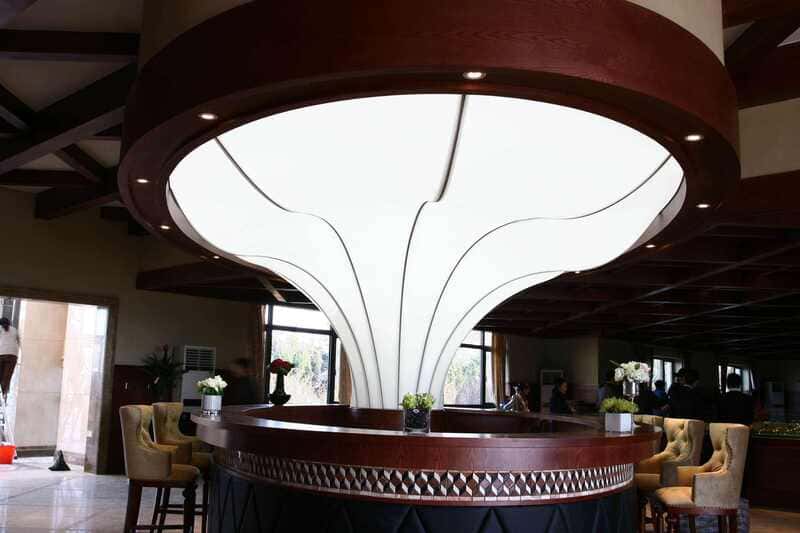
A structural 3D stretch ceiling utilizes the inherent elasticity of the stretch ceiling membrane to physically conform to a custom-built, three-dimensional framework, creating tangible architectural shapes and volumes. This method involves stretching flexible solid-color or textured films over bespoke aluminum profiles, resulting in ceilings that literally project into the room in waves, domes, cones, or multi-level configurations.
Harnessing Flexibility for Physical 3D Shapes
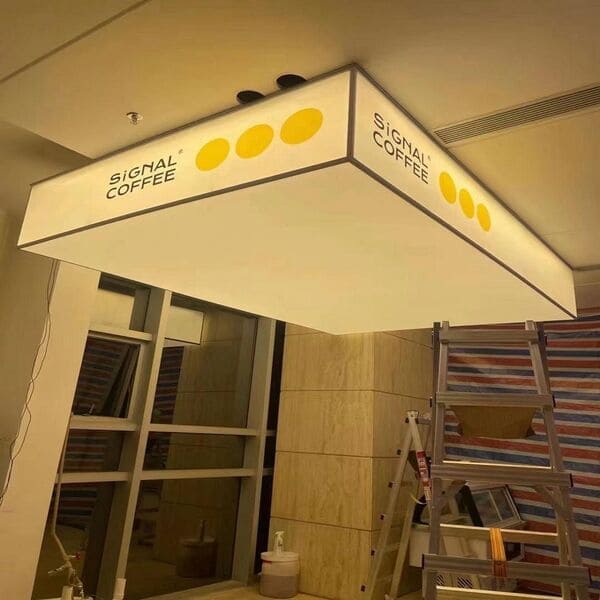
When clients inquire about creating actual curves, waves, or tiered designs that project down into the room, my first response is always to highlight the unparalleled flexibility of our stretch ceiling films. Unlike rigid materials like plasterboard, PVC stretch membranes possess extraordinary elasticity, allowing them to adapt to virtually any shape or contour.9 This is the superpower of the stretch ceiling system when it comes to structural 3D. We provide films in various finishes—matte, satin, glossy, translucent, metallic, and even acoustic options—that can be stretched and shaped around complex forms without creasing or tearing. This physical malleability is what enables designers to create dramatic architectural statements, from flowing organic shapes to sharp, geometric structures. The material's ability to stretch and then hold its tension once installed ensures a smooth, taut, and seamless finish10 that precisely follows the underlying framework. This extreme adaptability is why stretch ceilings are the go-to solution for creating bespoke, physically dimensioned ceiling designs.
The Importance of Custom Framing and Profiles
Executing a structural 3D stretch ceiling relies heavily on a robust and precisely fabricated underlying framework. This framework is typically constructed from specialized aluminum profiles, which serve as the skeleton for the entire 3D structure. At Foxygen, we understand that "one size fits all" simply doesn't apply here. We supply a range of standard aluminum profiles, but for truly custom 3D shapes, bespoke profiles are often required. These can be custom-bent, cut, or even specially extruded to create the exact curves, angles, and levels dictated by the design. For example, to create a perfect dome, a circular profile is needed, while a series of parallel, wavy profiles would form an undulating ceiling. The precision of these profiles is paramount, as the stretch film will conform exactly to their contours. Poorly fabricated or misaligned profiles will result in an uneven or distorted finish. My team provides the technical guidance and high-quality aluminum profiles, even offering custom surface colors and special mold custom profiles, ensuring that the structural integrity and aesthetic vision of the 3D stretch ceiling are fully realized.
Popular Structural 3D Stretch Ceiling Designs
The possibilities for structural 3D stretch ceilings are extensive, limited mainly by imagination and engineering precision. Some of the most popular designs I've seen clients implement include:
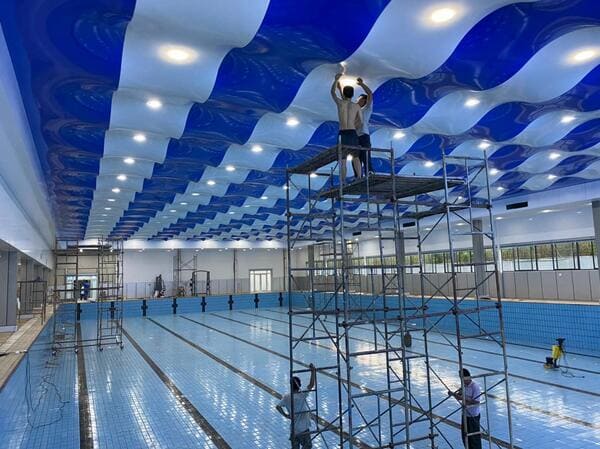
- Wave Ceilings: These create a fluid, undulating effect, reminiscent of ocean waves or draped fabric. They are achieved by installing a series of curved aluminum profiles at varying heights, over which the membrane is stretched. These are particularly effective in large commercial spaces, restaurants, or exhibition centers, adding dynamic movement and visual interest.
- Dome and Cone Shapes: These circular or conical projections add architectural grandeur and can be used to highlight specific areas or light fixtures. They require precision-bent circular or conical aluminum profiles to form the base, with the membrane stretched to create a seamless, volumetric form.
- Multi-Level or Tiered Designs: This involves creating different ceiling planes at varying heights, connected by vertical or angled stretch ceiling panels. This adds depth and definition to a room, often incorporating LED lighting within the different levels to create a layered glow. This is frequently seen in high-end residential projects and hotel lobbies.
- Geometric Projections: Sharp, angular shapes like pyramids, cuboids, or bespoke sculptural elements can be formed. These require highly accurate cutting and joining of aluminum profiles to create the desired facets and edges.
These designs leverage the stretch ceiling's elasticity to transform flat spaces into dynamic, sculptural environments. Our films are robust enough to maintain these complex shapes over time, offering a durable and visually stunning solution.
Which 3D Stretch Ceiling Method is Right for Your Project?
Deciding between a visual 3D illusion and a physical structural 3D design can be daunting, especially when both offer compelling aesthetics. The challenge often lies in aligning your creative vision with the practicalities of material sourcing, installation, and budget. Without clear guidance, contractors and designers risk ordering the wrong components or encountering unforeseen project complexities.
Choosing the right 3D stretch ceiling method depends on your primary design intent: opt for a visual 3D approach if you seek an immersive, image-based experience enhanced by light, or select a structural 3D approach if your goal is to create tangible, architectural shapes and volumes within the space. Each method requires specific materials and installation techniques, making careful consideration essential for project success.
Key Considerations for Your 3D Stretch Ceiling Project
When I consult with clients on their 3D stretch ceiling projects, my first diagnostic question is always: "Do you want a 3D picture with lighting, or are you building a physical 3D shape?" This helps us immediately narrow down the most suitable approach. Here are the key factors I always discuss:
- Design Intent: What is the ultimate aesthetic you are trying to achieve? Is it an immersive visual experience, or a physically sculpted architectural element? If your vision is a hyper-realistic sky or an abstract pattern with depth, the visual 3D approach using UV printing is likely best. If you want a wave, dome, or multi-level ceiling that genuinely protrudes, then a structural 3D approach is needed.
- Budget: Generally, UV printing on a flat film can sometimes be more cost-effective for achieving a 3D look compared to the complex framework and specialized installation required for structural 3D shapes. However, high-quality bespoke printing and advanced LED backlighting also have their costs. Structural 3D incurs costs for custom aluminum profiles and potentially more intensive labor.
- Installation Complexity & Time: Visual 3D on a flat plane might have a quicker installation time once the lighting box is in place. Structural 3D, with its custom framework, demands more intricate planning and longer installation periods due to the precision required for shaping the profiles and stretching the film.11
- Lighting Requirements: For visual 3D, precise and diffused backlighting is non-negotiable. For structural 3D, lighting can be integrated into the structure, highlighting the contours, or applied externally, but it's not strictly necessary for the "3D" effect itself.
- Long-Term Maintenance: Both types are relatively low maintenance. However, accessing backlighting for repairs or updates on a visual 3D ceiling needs to be considered during design. For structural 3D, the robustness of the framework is key to its longevity.
Consulting Your Supplier for the Right Path
Choosing the correct path for your 3D stretch ceiling is a critical decision that impacts not just the aesthetics but also the budget, timeline, and overall success of your project. This is where a knowledgeable supplier like Foxygen becomes an invaluable partner. Instead of simply providing a product, we engage in project consultation from the outset. My team offers product selection assistance, helping you understand the nuances between translucent films for printing versus opaque films for structural shapes. We provide detailed product documentation and specifications, ensuring you know exactly what materials are involved. For structural 3D, our expertise in custom aluminum profiles is essential, as is our ability to provide installation guidance and even training for your teams. We help you mitigate procurement risks by ensuring you order the right components—whether it's high-resolution UV printed films for optical illusions or highly elastic solid-color films and precise custom profiles for physical architectural structures. Our goal is to translate your design concepts into executable, stunning 3D stretch ceiling realities.
| Feature / Method | Visual 3D Stretch Ceiling (Optical Illusion) | Structural 3D Stretch Ceiling (Physical Framework) |
|---|---|---|
| Primary Effect | Illusion of depth from a flat surface | Tangible, physical shapes and volumes |
| Core Material | Translucent PVC film, UV-printed with 3D graphics | Solid-color, textured, or translucent PVC film (unprinted) |
| Key Enabler | High-resolution UV printing + uniform LED backlighting | Highly elastic PVC membrane + custom aluminum profiles for framework |
| Typical Designs | Sky murals, geometric patterns, abstract art, trompe l'oeil | Waves, domes, cones, multi-levels, geometric projections |
| Installation Complexity | Focus on print quality, backlighting, and light box depth | Focus on framework precision, profile bending, and membrane stretching |
| Foxygen's Role | UV printing, film selection, backlighting guidance | Elastic film supply, custom aluminum profiles, installation guidance |
| Best For | Immersive visual experiences, thematic rooms | Architectural statements, dynamic space shaping, ceiling features |
| Sourcing Considerations | Image resolution, UV ink quality, LED specifications | Profile design, material elasticity, installation expertise |
Frequently Asked Questions
Can any stretch ceiling material create a 3D effect?
No, not all stretch ceiling materials are suitable for creating a 3D effect. The ability to achieve a 3D effect depends on the specific method chosen: either a translucent film for UV printing and backlighting (visual 3D) or a highly elastic film designed to conform to physical frameworks (structural 3D). Standard opaque films without special properties would not achieve either effect.
How long does it take to install a 3D stretch ceiling?
The installation time for a 3D stretch ceiling varies significantly based on the method and complexity. A visual 3D ceiling on a flat surface with backlighting might take 1-3 days for a standard room, after the light box is built. A structural 3D ceiling with complex custom frameworks can take several days to a week or more, depending on the intricacy of the shapes and the size of the area.
What are the maintenance requirements for 3D stretch ceilings?
Both visual and structural 3D stretch ceilings are low maintenance. They can be gently wiped clean with a soft, damp cloth and mild detergent if needed. For visual 3D ceilings, ensuring the LED backlighting system is accessible for potential maintenance or replacement is an important design consideration. The films are anti-static, reducing dust accumulation.12
Is a 3D stretch ceiling suitable for outdoor use?
No, stretch ceilings, including those designed for 3D effects, are typically engineered for interior applications. While the PVC material itself is durable, exposure to extreme weather, UV radiation, and temperature fluctuations outdoors can degrade the material over time, affect print quality, and compromise the integrity of the tensioned system.
Conclusion
Understanding "what is a 3D stretch ceiling" moves beyond a simple definition to a practical distinction between two powerful design approaches: the captivating visual illusion and the impressive physical structure. I've shown that whether you choose the high-impact UV-printed films with strategic backlighting for an optical 3D effect, or the flexible membranes stretched over custom aluminum profiles for a tangible structural 3D design, each method offers unique opportunities to transform a space. The key is to align your design vision with the appropriate materials and installation techniques from the outset.
At Foxygen, I pride myself on guiding our B2B partners—from interior decorators and contractors to architects and installers—through this critical decision-making process. We don't just supply stretch ceiling products; we provide the expertise, custom solutions, and support needed to ensure your 3D stretch ceiling project is executed flawlessly. If you're planning a project and need to translate your 3D design concepts into a concrete plan, don't hesitate to reach out. Contact me or my team at Foxygen today to discuss your specific needs and let us help you bring your extraordinary ceiling visions to life.
"Spatial Augmented Reality - Merging Real and Virtual Worlds", https://pages.cs.wisc.edu/~dyer/cs534/papers/SAR.pdf. Research on pictorial depth cues and backlit image displays supports the mechanism by which a flat printed translucent surface can create perceived depth when illuminated from behind. Evidence role: mechanism; source type: research. Supports: The source should explain that printed images using depth cues can appear three-dimensional and that transmitted/backlighting can affect perceived contrast and depth.. Scope note: This would support the perceptual mechanism generally, not prove performance for a specific stretch-ceiling product. ↩
"Depth perception", https://en.wikipedia.org/wiki/Depth_perception. Accounts of pictorial depth cues in visual perception describe how two-dimensional images can evoke perceived depth through perspective, shading, occlusion, texture gradients, and relative size. Evidence role: definition; source type: encyclopedia. Supports: The source should define pictorial depth cues and show that flat images can convey perceived depth through perspective, shading, occlusion, and related cues.. ↩
"INKJET PRINTING OF SU-8 FOR POLYMER-BASED MEMS A ...", https://engineering.purdue.edu/oxidemems/conferences/mems2008/PDFs/Papers/102_0244.pdf. Studies of UV-curable inkjet printing describe the process as a digital printing method in which UV light rapidly cures inks on substrates including polymers, enabling detailed graphic reproduction. Evidence role: mechanism; source type: paper. Supports: The source should describe UV-curable inkjet printing and its use for detailed printing on polymer or film substrates.. Scope note: The evidence would describe UV printing technology broadly and may not evaluate stretch-ceiling membranes specifically. ↩
"Application of a UV curable hard coating containing κ- ...", https://www.sciencedirect.com/science/article/abs/pii/S1359836811004963. Research on UV-curable inks for polymer substrates reports that adhesion and durability on PVC-type surfaces depend on ink formulation, surface energy, and curing conditions. Evidence role: general_support; source type: paper. Supports: The source should provide evidence that UV-curable inks can bond to PVC or polymer substrates and that adhesion depends on ink chemistry, surface preparation, and curing conditions.. Scope note: Such evidence would not support the absolute term “perfectly” or guarantee durability for every ink-film combination. ↩
"All About Images: What is Resolution? - Research Guides", https://guides.lib.umich.edu/c.php?g=282942&p=1885350. Educational materials on digital imaging explain that raster images enlarged beyond their available pixel resolution lose apparent sharpness and may show visible pixelation in print. Evidence role: mechanism; source type: education. Supports: The source should explain that enlarging raster images beyond their effective pixel resolution reduces sharpness and can reveal pixelation.. ↩
"Design of microstructure optical film for high uniform mini-LED ...", https://ui.adsabs.harvard.edu/link_gateway/2023SPIE12765E..0BH/doi:10.1117/12.2689049. Lighting and display-engineering research treats luminance uniformity as a key determinant of backlit image quality because uneven illumination creates visible bright and dark regions. Evidence role: mechanism; source type: research. Supports: The source should support the idea that nonuniform backlighting produces visible luminance variations that affect perceived image quality.. Scope note: This supports the general lighting principle; it does not establish a universal installation specification for all stretch ceilings. ↩
"(PDF) Direct LED backlight for large area LCD TVs: brightness analysis", https://www.academia.edu/12703443/Direct_LED_backlight_for_large_area_LCD_TVs_brightness_analysis. Studies of LED backlight and light-box design show that source spacing, diffuser characteristics, and cavity depth affect light mixing and the visibility of hot spots. Evidence role: mechanism; source type: paper. Supports: The source should explain that LED spacing, diffuser properties, and optical cavity depth influence light mixing and luminance uniformity.. Scope note: The source would support the optical design principle rather than prescribe a specific minimum ceiling cavity depth. ↩
"understanding their forms. Membrane structures", https://www.academia.edu/25858675/Membrane_structures_understanding_their_forms_Membrane_structures_understanding_their_forms. Architectural sources on tensile membrane systems describe flexible membranes as suitable for continuous curved and free-form surfaces that are more difficult to realize with rigid panel materials. Evidence role: general_support; source type: education. Supports: The source should explain that membrane structures are used for lightweight curved or free-form architectural surfaces, while rigid board systems require framing, segmentation, or shaping to approximate curves.. Scope note: This is a contextual comparison and does not mean rigid materials can never be shaped into curves with specialized fabrication. ↩
"Macro-Microscopic Characterization and Long-Term Performance ... - PMC", https://pmc.ncbi.nlm.nih.gov/articles/PMC12431204/. Material studies of PVC films and PVC-coated membranes report measurable tensile elongation and flexibility, supporting their use in tensioned applications requiring conformance to curved forms. Evidence role: mechanism; source type: paper. Supports: The source should provide material-property evidence that PVC films or PVC-coated membranes can elongate and deform under tension.. Scope note: The evidence would not justify the phrase “virtually any shape,” since actual formability depends on membrane thickness, temperature, fastening system, and geometry. ↩
"Tensile structure", https://en.wikipedia.org/wiki/Tensile_structure. Educational references on tensile membrane structures explain that membrane prestress stabilizes the surface form and helps produce a taut, smooth enclosure. Evidence role: mechanism; source type: education. Supports: The source should explain that prestress or tension in membrane structures stabilizes the surface and contributes to smooth form.. Scope note: This supports the structural principle, not the workmanship quality of any particular ceiling installation. ↩
"3. The Design and Construction Process", https://www.cmu.edu/cee/projects/PMbook/03_The_Design_And_Construction_Process.html. Construction-management research links design complexity and custom components with increased coordination requirements, planning effort, and potential schedule impacts. Evidence role: general_support; source type: paper. Supports: The source should support the broader construction-management principle that custom components, geometric complexity, and coordination demands can increase planning and installation time.. Scope note: This would provide contextual support for the claim and may not include measured installation times for stretch ceilings specifically. ↩
"Progress in Studies of Surface Nanotextures and Coatings with ...", https://pmc.ncbi.nlm.nih.gov/articles/PMC9612287/. Research on electrostatic particle deposition indicates that charged surfaces can attract dust particles and that antistatic treatments reduce surface charge accumulation. Evidence role: mechanism; source type: paper. Supports: The source should explain that electrostatic charge can attract particles and that antistatic treatments reduce charge buildup on polymer surfaces.. Scope note: This supports the mechanism of reduced dust attraction but does not verify that all stretch-ceiling films have antistatic properties. ↩